Arkansas Probate Checklist: What Every Executor Needs to Know
Navigating the probate process in Arkansas can feel overwhelming—especially during an already emotional time. Whether you’re an executor, family member, or beneficiary, this step-by-step checklist will help you understand what to expect and how to move forward with confidence.
Note: This guide is for informational purposes only. Always consult a licensed Arkansas probate attorney to ensure compliance with state and local laws.
📌 What Is Probate in Arkansas?
Probate is the legal process of settling a deceased person’s estate. It involves validating the will (if one exists), appointing a personal representative, paying debts and taxes, and distributing assets to heirs. In Arkansas, probate is typically required when the deceased owned assets solely in their name.
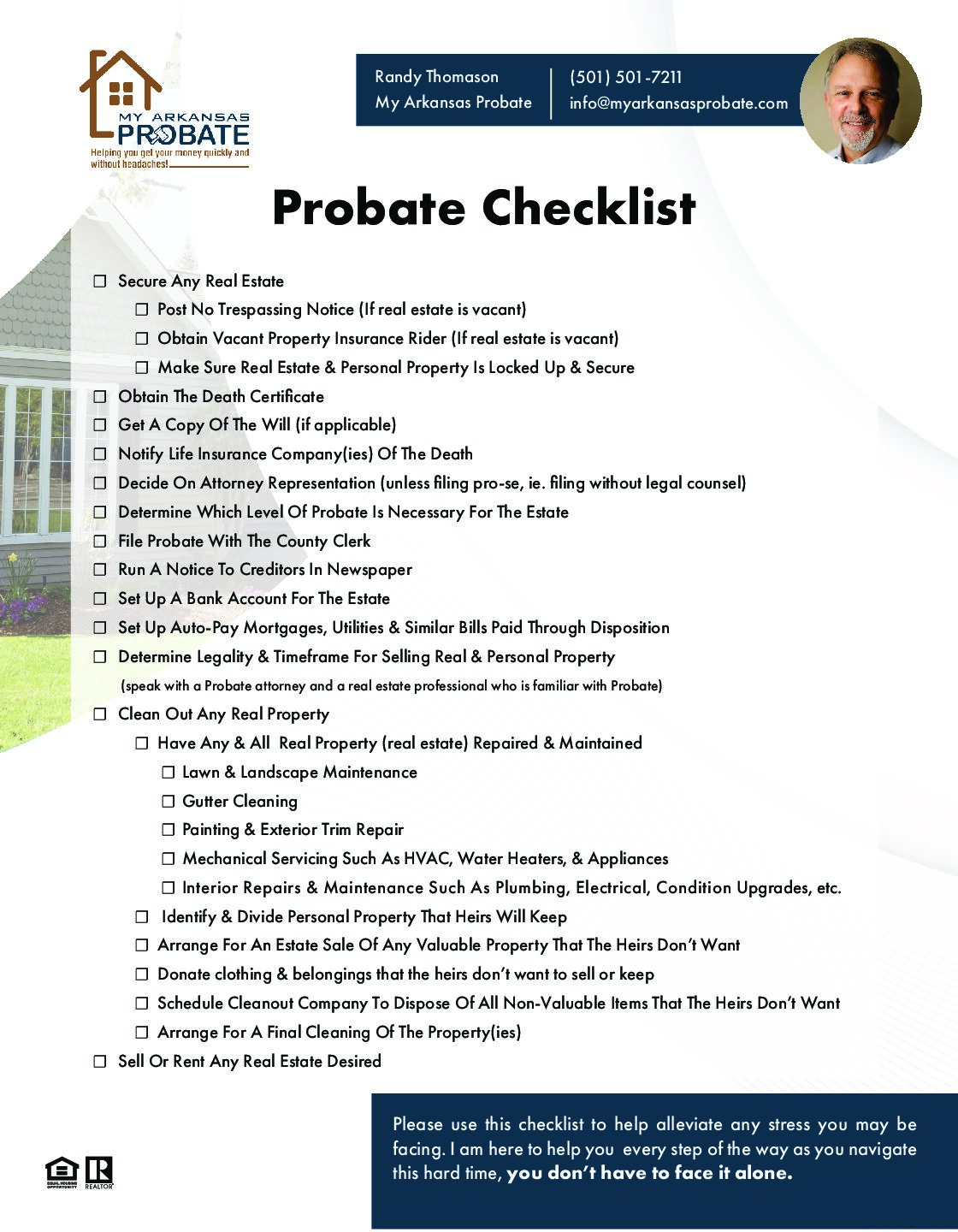
🗂️ Arkansas Probate Checklist
Here’s a simplified overview of the probate process in Arkansas. Some steps may vary depending on whether there’s a will or the size of the estate:
- Obtain the Death Certificate: Secure multiple certified copies for court filings, banks, and insurance companies.
- Locate and File the Will (if applicable): Submit the original will to the probate court in the county where the deceased resided.
- File a Petition to Open Probate: Request to be appointed as the personal representative (executor or administrator).
- Notify Heirs and Creditors: Send formal notice to beneficiaries and publish a notice to creditors in a local newspaper.
- Inventory and Appraise Assets: List all estate assets—real estate, bank accounts, vehicles, investments—and determine their value.
- Open an Estate Bank Account: Use this account to manage estate funds, pay debts, and distribute assets.
- Pay Debts, Taxes, and Final Expenses: Settle outstanding bills, funeral costs, and file any required tax returns.
- Distribute Assets to Heirs: Once approved by the court, distribute remaining assets according to the will or Arkansas intestacy laws.
- File Final Accounting and Close the Estate: Submit a final report to the court and request formal closure of the estate.
❌ Common Mistakes Executors Make on the Arkansas Probate Checklist
Even the most diligent executors can stumble when navigating the Arkansas probate process. Because probate involves strict legal timelines and detailed documentation, a single oversight can delay distributions or expose the executor to personal liability. Knowing what mistakes to avoid is just as critical as following the required steps.
- Failing to File on Time: Probate must be filed within the time limits set by Arkansas law. Missing these deadlines can result in court penalties, added legal fees, or even forfeiture of your right to serve as executor.
- Not Securing Property: One of the executor’s first duties is to safeguard estate assets such as real estate, vehicles, jewelry, and financial accounts to prevent loss, damage, or theft before distribution.
- Skipping Creditor Notifications: Arkansas law requires that known creditors be notified through formal notice and public posting. Ignoring this obligation can leave the executor personally responsible for unpaid debts.
- Mixing Personal and Estate Funds: Combining your own money with estate funds, even unintentionally, can create confusion and raise questions of mismanagement. Always open a dedicated estate account to handle all income and expenses.
By staying organized, following each legal step carefully, and avoiding these common errors, executors can move through the Arkansas Probate Checklist efficiently. Just follow the checklist to achieve a smooth, compliant, and transparent probate process for all parties involved.
Small Estate Affidavit in Arkansas
If the estate is valued under $100,000 (excluding exempt property), Arkansas allows heirs to file a Small Estate Affidavit 45 days after death. This simplified process avoids full probate and can be a faster, more cost-effective option.
Frequently Asked Questions
Do I need a lawyer to go through probate in Arkansas?
Not always. While small estates may be handled without legal help, hiring a probate attorney is highly recommended for estates involving real property, disputes, or complex debts.
How long does probate take in Arkansas?
Most probate cases take 6 to 12 months, depending on the estate’s complexity, court schedules, and whether any disputes arise.
What happens if there is no will?
If there’s no will, the estate is distributed according to Arkansas intestacy laws, which prioritize spouses, children, and other close relatives. The court will appoint an administrator to manage the process.
Can I avoid probate altogether?
Yes—certain assets like jointly owned property, payable-on-death accounts, and living trusts can bypass probate. Proper estate planning is key to minimizing or avoiding probate.
Need Help Navigating Probate?
You don’t have to do this alone. At My Arkansas Probate, we help families and executors manage the probate process with clarity, compassion, and confidence.
📅 Schedule a Free Consultation
👉 Or learn more about our estate solutions

Step-by-step Probate Checklist